

Oil and grease spills are a routine challenge in garages, workshops, manufacturing facilities, food-processing environments, maintenance areas, and industrial plants. A small leak under a machine or a larger spill across a production floor can quickly create slippery surfaces, messy cleanup, and additional maintenance work.
For years, conventional absorbents such as clay-based products and traditional oil-dry have been common choices for managing these spills. However, facilities today have access to newer absorbent products designed around higher absorption capacity, easier application, improved retention, and reduced cleanup effort.
Two examples are Shurfoot® Non-Slip Absorbent and Solo Super Absorbent, each offering a different approach to spill management.
The Limitations of Traditional Oil-Dry
Traditional oil-dry products can be useful for absorbing spills, but not every absorbent performs the same way when dealing with different liquids.
Heavy grease, high-viscosity oils, semi-liquid materials, and other difficult fluids can require significant amounts of absorbent. Once applied, the material must also be collected and disposed of, adding labor to the cleanup process.
Another consideration is what happens after absorption. An effective absorbent should not simply take in a liquid. It should also retain that liquid well enough to make sweeping, collection, and disposal more manageable.
This is where newer absorbent formulations can offer an alternative.
What Makes Modern Absorbents Different?
Modern spill absorbents are increasingly designed to address more than basic absorption. Depending on the product, important characteristics can include:
- High absorption capacity
- Liquid retention
- Ability to handle high-viscosity fluids
- Low-density or fine-particle formulations
- Ease of application
- Simple sweep-up and disposal
- Compatibility with different spill-control applications
- Reduced odor or dust compared with some traditional materials
The right product still depends on the type of spill, the work environment, and the facility’s established cleanup and disposal procedures.
Solo Super Absorbent: High-Capacity Absorption for Difficult Spills


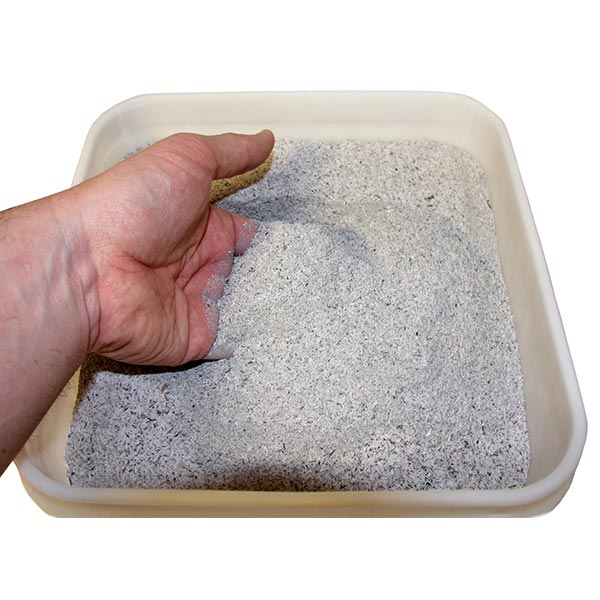
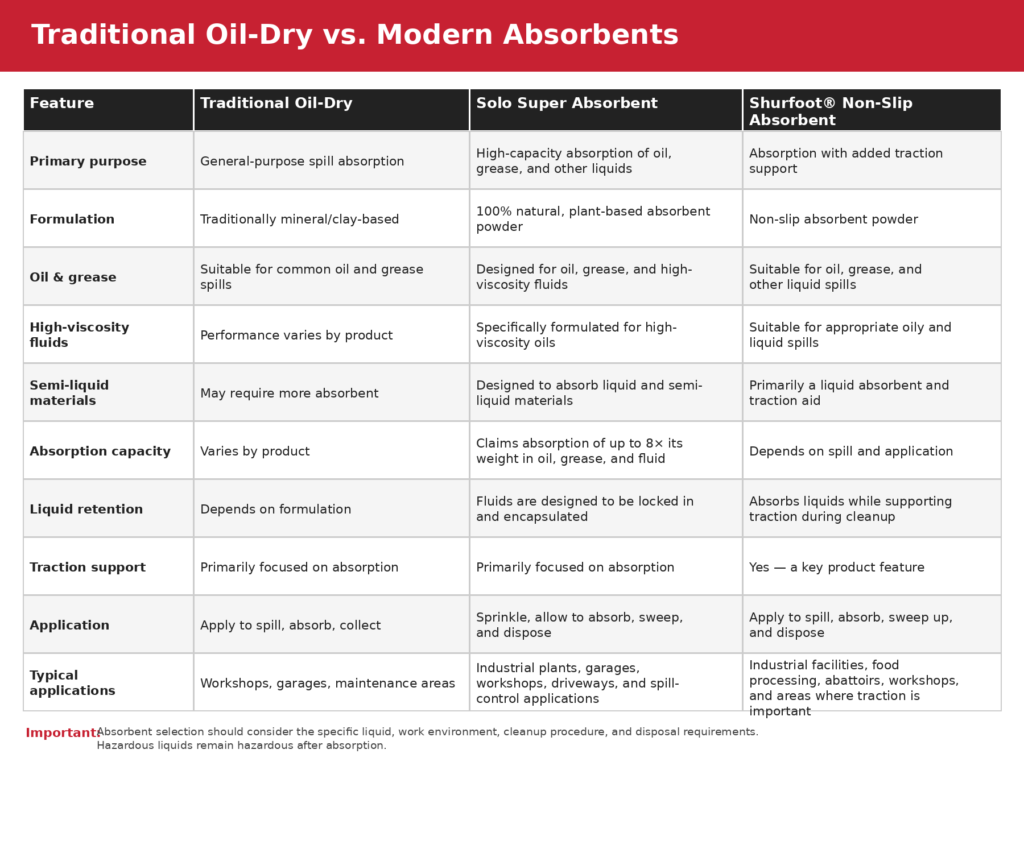
Solo Super Absorbent is a plant-based absorbent powder designed for oil, grease, and other liquid spills. According to its product specifications, it can absorb up to eight times its weight in oil, grease, and fluid and is formulated to handle high-viscosity oils and both liquid and semi-liquid materials.
Its low-density granules provide more surface area, allowing a relatively small amount of product to cover a spill. The manufacturer also states that the product can absorb up to six times more liquid per pound than conventional absorbents.
The application is straightforward: sprinkle, allow the material to absorb the spill, sweep it up, and dispose of the used absorbent appropriately.
Solo Super Absorbent is also described as 100% natural and plant-based, non-toxic, silica-free, odorless, non-flammable, and non-leaching. These characteristics may make it an option for facilities looking for an alternative to conventional absorbent materials.
However, environmental or safety claims should always be considered alongside the nature of the liquid being absorbed. Absorbing a hazardous chemical does not make that chemical non-hazardous. Contaminated absorbent must still be handled and disposed of according to applicable regulations and facility procedures.
Shurfoot®: Absorption Plus Traction
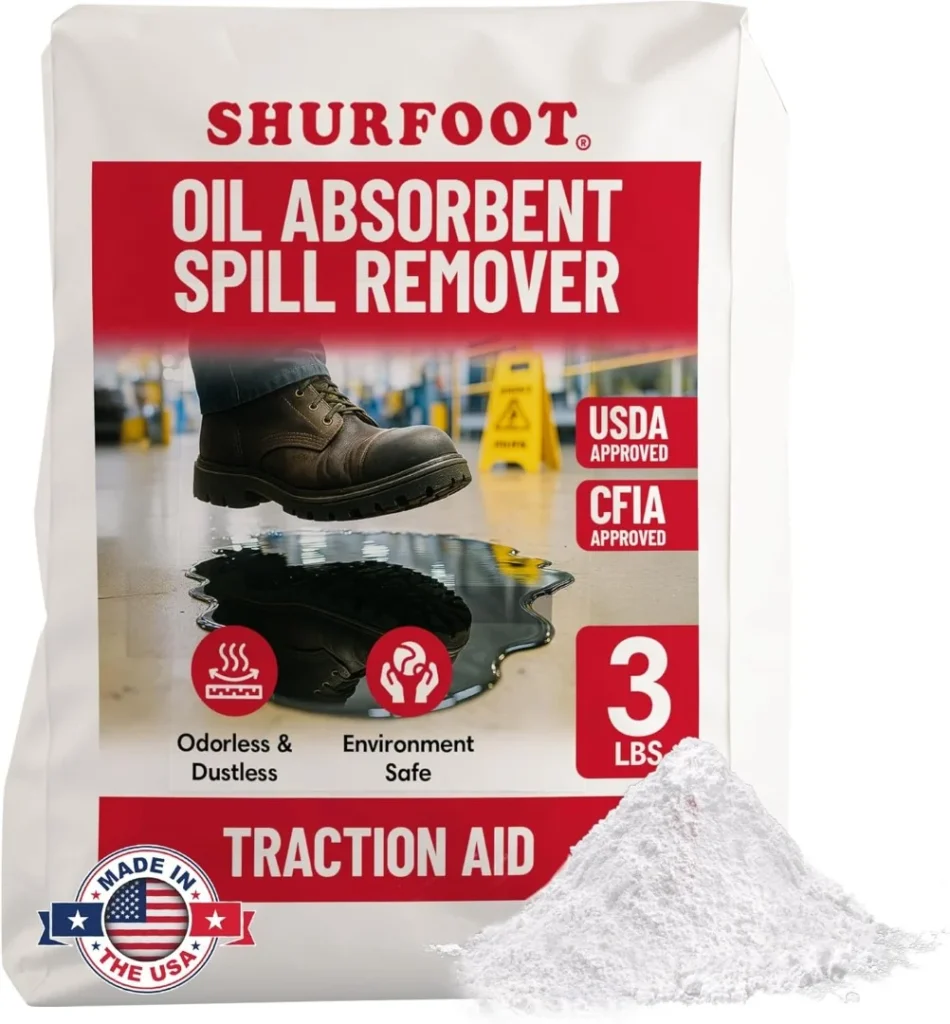
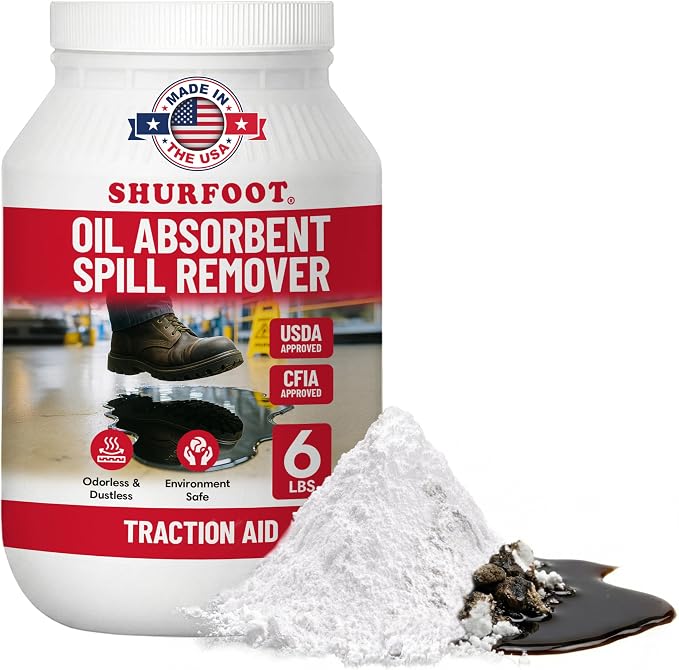
While some absorbents are primarily focused on absorbing and retaining liquids, Shurfoot® Non-Slip Absorbent also emphasizes traction.
This can be particularly relevant in environments where oil, grease, water, blood, or other liquids can create slippery walking surfaces. Shurfoot® is designed to absorb liquids while helping provide traction during spill cleanup.
For industrial facilities, workshops, food-processing environments, and other areas where workers regularly encounter wet or oily floors, combining absorption with traction support can be an important consideration.
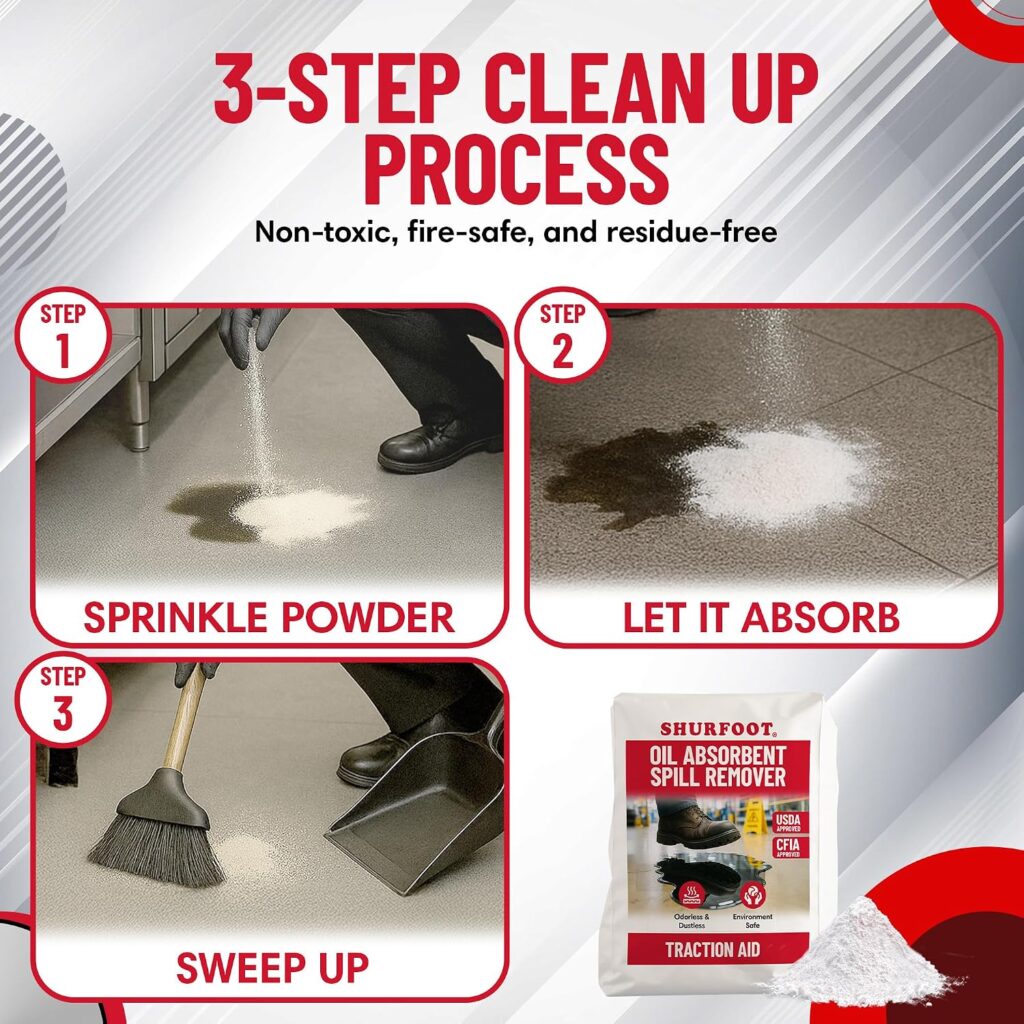
Shurfoot® can be applied to an appropriate spill, allowed to absorb the liquid, and then swept up as part of the facility’s cleanup procedure. After the absorbent and contaminated material have been removed, the affected surface should still be cleaned according to the site’s established procedures.
Choosing Between Different Absorbents
There is no single absorbent that is appropriate for every spill. The best choice depends on what was spilled, where the spill occurred, how viscous the material is, and how the contaminated material needs to be collected and disposed of.
For example, a facility dealing primarily with heavy oil and grease may prioritize absorption capacity and retention. A workplace where slippery floors are a major concern may place additional importance on traction during cleanup.
When evaluating an absorbent, consider:
1. What type of liquid are you absorbing?
Oil, grease, water, blood, chemicals, and other fluids can behave differently. Check that the product is suitable for the specific material.
2. How thick is the spill?
High-viscosity oils and semi-liquid materials can require an absorbent capable of interacting effectively with thicker fluids.
3. How much absorbent will you need?
Absorption capacity affects how much material is required for a particular spill.
4. How easily can the material be collected?
A product that can be easily swept up can help simplify the cleanup process.
5. What happens after absorption?
Consider how the used absorbent will be contained, transported, and disposed of. Hazardous materials require appropriate handling regardless of the absorbent used.
Modern Spill Control Is About More Than Absorption
Moving beyond traditional oil-dry does not simply mean finding a product with a higher absorption number. Effective spill management involves selecting an absorbent that fits the liquid, environment, cleanup process, and disposal requirements.
Products such as Solo Super Absorbent provide a high-capacity option for oil, grease, and other difficult fluids, while Shurfoot® combines absorbency with a focus on non-slip traction for appropriate spill situations.
The goal is simple: contain the spill, absorb the liquid, collect the material, and restore the area safely and properly.
With the right absorbent readily available, facilities can make spill response more organized and reduce the disruption caused by everyday leaks, drips, and unexpected spills.
Looking for an alternative to conventional oil-dry? Explore Shurfoot® and Solo Super Absorbent to determine which solution fits your spill-control needs.